The area under the eyes is one of the first places people notice signs of fatigue or aging. Puffiness, shadows, hollows, and wrinkles can all develop here, often making someone look tired even when they feel well-rested. Because many eye issues can appear similar at a glance, patients often feel unsure whether fillers or eyelid surgery would be the right approach.
One of the most important decisions in eye rejuvenation is choosing the correct procedure for what is actually happening beneath the skin. Treating under-eye bags as volume loss, or volume loss as puffiness, can lead to disappointing results or even make concerns more noticeable. Understanding the difference between eyelid bags and eyelid fat loss is the first step toward a more refreshed, youthful appearance.

The Essentials of Under-Eye Treatments
- Under-eye bags are typically structural fat protrusions, while hollowness is caused by a loss of volume or fat over time.
- Applying dermal fillers to actual eyelid bags can inadvertently increase puffiness and make the area look more prominent.
- Blepharoplasty is the preferred surgical solution for correcting protruding fat pads and removing excess skin that fillers cannot fix.
- Dermal fillers are most effective for smoothing the tear trough and restoring volume in patients with good skin elasticity.
- Effective results depend on a professional anatomical assessment since skin laxity, fat displacement, and bone changes often coexist.
Understanding the Anatomy of the Under-Eye Area
The under-eye area is more complex than it appears. Skin thickness, fat placement, muscle tone, and facial anatomy all play a role in how this delicate region looks over time. Changes in any one of these layers can affect the overall appearance of the eyelid area.
The Tear Trough
The tear trough is the natural groove that runs from the inner corner of the eye diagonally toward the cheek. In younger patients, this area tends to be smooth and well-supported. Over time, volume loss along the tear trough can create shadows and contribute to dark circles, even when skin quality remains good.
Tear trough filler is sometimes used to soften this hollow, but it must be done carefully and only when anatomy supports it. Not all under-eye concerns are caused by tear trough depth alone.
Eyelid Fat Pads
Everyone has natural fat pads beneath the eyes. These fat pads help cushion and protect the eye, but with age, they can shift forward or become more prominent. When this happens, they may appear as eyelid bags or puffiness.
In other cases, fat volume decreases or shifts downward, leading to a hollow or sunken look. This distinction is critical when deciding between fillers or surgery.
Skin, Muscle, and Bone Changes Over Time
Skin in the eyelid area is thinner than anywhere else on the face. Over time, collagen loss can lead to wrinkles and laxity. The underlying muscle may weaken, and even subtle bone changes can reduce support in the midface.
Because these layers work together, effective eye rejuvenation often depends on understanding how multiple factors contribute to a patient’s appearance rather than focusing on one visible issue alone.
What Are Under-Eye Bags?
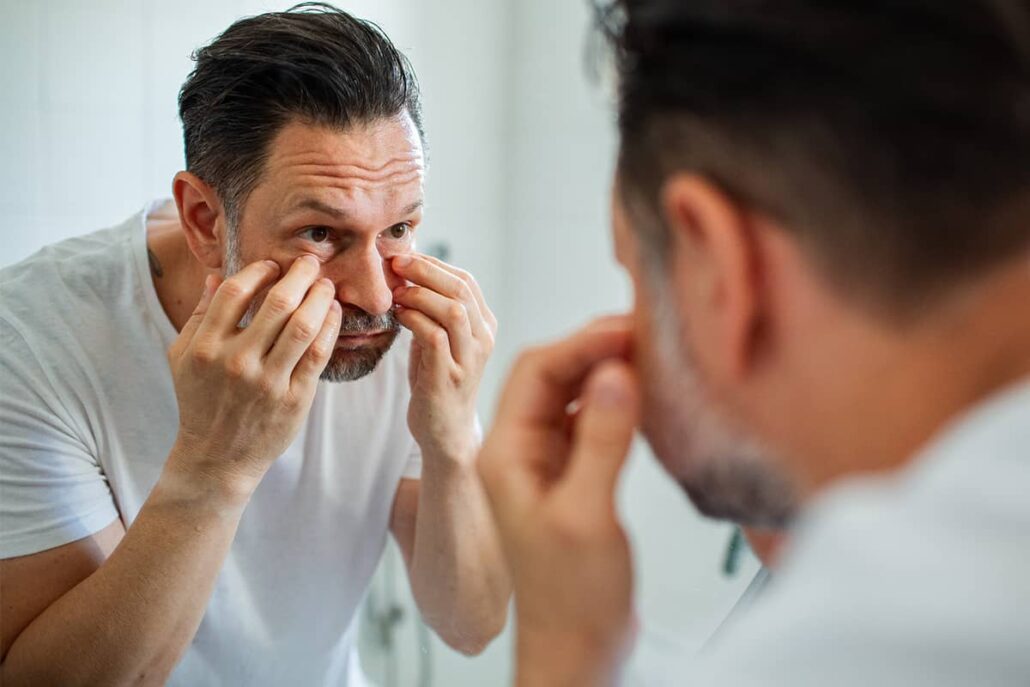
Under-eye bags typically refer to visible bulges or puffiness beneath the lower eyelids. These are often structural rather than surface-level concerns.
What Are Under-Eye Bags?
Under-eye bags typically refer to visible bulges or puffiness beneath the lower eyelids. These are often structural rather than surface-level concerns.
Common Causes of Under-Eye Bags
Under-eye bags may develop for several reasons, including aging, genetics, and changes in fat positioning. In many cases, the issue is not fluid retention alone but actual protrusion of eyelid fat.
Factors that can contribute include:
- Forward movement of eyelid fat pads
- Weakening of the tissue that holds fat in place
- Loss of skin elasticity leading to sagging
- Genetic predisposition to eyelid bags
Because these causes are structural, topical treatments and dermal fillers may have limited benefit for true eyelid bags.
Visual Characteristics of Under-Eye Bags
Patients with eyelid bags often notice:
- Persistent puffiness that does not improve with rest
- Bulging beneath the lower eyelids
- A rounded or swollen contour under the eyes
- Shadows caused by protruding tissue
In these cases, adding volume with fillers can sometimes make puffiness appear more pronounced rather than improved.
How to Tell the Difference Between Bags and Fat Loss
While only a professional evaluation can provide a diagnosis, there are some general observations that may help patients better understand their concerns.
Simple At-Home Observations
Looking at the under-eye area in different lighting and facial expressions can sometimes reveal patterns. Puffiness that remains constant throughout the day may suggest eyelid bags, while hollowness that appears more prominent under overhead lighting may point to volume loss.
Gently pressing the area can also offer clues. Firm bulges may indicate fat pads, while a soft indentation may suggest hollowing. These observations are not diagnostic, but they can help guide questions during a consultation.
Why Self-Diagnosis Has Limits
The under-eye area is delicate, and appearances can be misleading. Skin laxity, wrinkles, and puffiness often coexist. Choosing fillers or surgery without understanding the underlying anatomy can lead to unsatisfactory results.
This is why evaluation by a facial plastic surgeon experienced in eyelid surgery and non-surgical eye rejuvenation is essential.


Trust your face to a specialist
My Goal is to create Harmony, Balance & true Beauty
Treatment Options Explained: Fillers vs. Eyelid Surgery
Choosing between fillers or surgery depends entirely on the cause of the concern, the patient’s anatomy, and their long-term goals.
When Under-Eye Fillers May Be the Right Choice
Dermal fillers are often used to address under-eye hollowness and tear trough depth. Hyaluronic acid fillers are commonly selected because they integrate smoothly and can be adjusted or dissolved if needed.
Fillers may be appropriate for patients who:
- Have volume loss rather than eyelid bags
- Have good skin elasticity
- Want a non-surgical procedure with minimal downtime
- Are seeking subtle eye rejuvenation
Dr. Schrader offers non-surgical under-eye treatments using carefully selected fillers to support a refreshed, natural look when anatomy allows.
When Blepharoplasty Is the Better Option
Blepharoplasty surgery is designed to address structural issues such as eyelid bags, excess skin, and laxity that fillers cannot correct. Surgical blepharoplasty allows for precise adjustment of fat and skin to improve contour and balance.
Lower eyelid surgery may be recommended for patients with:
- Prominent eyelid bags caused by fat protrusion
- Excess skin or significant wrinkles
- Eye puffiness that does not respond to non-surgical options
Upper blepharoplasty may also be considered when drooping skin affects the upper eyelid area. These procedures are tailored to the individual patient and performed with attention to natural facial proportions.

Combination Treatments for Eye Rejuvenation
In some cases, the best results come from combining surgical and non-surgical techniques. A blepharoplasty procedure may address structural concerns, while dermal filler injections refine contour or support adjacent areas.
A customized treatment plan allows for balanced, natural-looking eye rejuvenation rather than an overcorrected appearance.
Blepharoplasty before & after photos
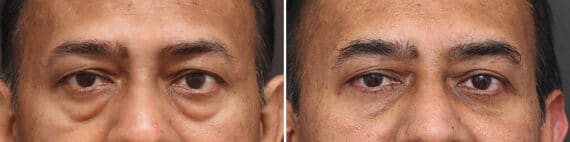
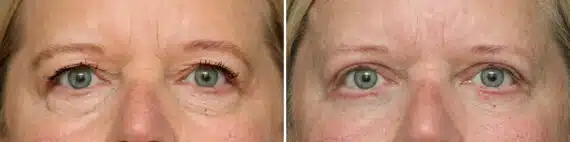
* All patients are unique and individual results may vary.
Risks of Choosing the Wrong Treatment
Using fillers when eyelid bags are present can worsen puffiness or create unnatural contours. Similarly, surgery may be unnecessary if volume loss is the primary issue.
Choosing fillers or surgery without a full understanding of facial anatomy increases the risk of dissatisfaction. This is why consultation with an experienced plastic surgeon is critical before proceeding with any cosmetic treatments.
What a Professional Consultation Looks Like
A thorough consultation includes evaluation of skin quality, fat positioning, muscle tone, and facial structure. Dr. Schrader carefully assesses how the eyelid area relates to the rest of the face and discusses whether fillers, eyelid surgery, or a combination approach may best address the patient’s concerns.
During this visit, patients can expect a clear explanation of recommended procedures, realistic outcomes, and recovery considerations. This personalized approach supports safe, effective eye rejuvenation tailored to each individual.
Taking the Next Step Toward Brighter, More Refreshed Eyes
Under-eye concerns can be frustrating, especially when it is unclear which treatment will truly help. Understanding the difference between eyelid bags and eyelid fat loss is the foundation for successful eye rejuvenation.
At Schrader Plastic Surgery, Dr. Nicole Schrader provides both surgical and non-surgical options for the eyelid area, allowing patients to explore the most appropriate approach during a personalized consultation. Scheduling a consultation today is the best way to receive expert guidance and a treatment plan designed around your unique facial anatomy and goals.
Frequently Asked Questions About Fillers and Eyelid Surgery